
At a Glance
- Global demand for automated diagnostic tools drives significant market growth through 2030.
- Integration of deep learning algorithms reduces diagnostic errors and examination times.
- North America maintains market dominance while the Asia-Pacific region shows the fastest growth.
The global healthcare landscape is currently witnessing a transformative shift as the intersection of artificial intelligence (AI) and medical imaging reaches a critical tipping point. The AI ultrasound market, in particular, is experiencing a period of unprecedented expansion, repositioning itself from a niche technological experimental phase into a foundational element of modern clinical diagnostics. As healthcare providers worldwide grapple with increasing patient volumes and a tightening supply of specialized medical personnel, the integration of automated diagnostic tools has emerged as a vital solution to improve patient outcomes and operational efficiency. Financial analysts and industry experts expect the sector to maintain a vigorous growth trajectory through 2030, fueled by substantial capital investments and a paradigm shift in how diagnostic data is captured and interpreted.
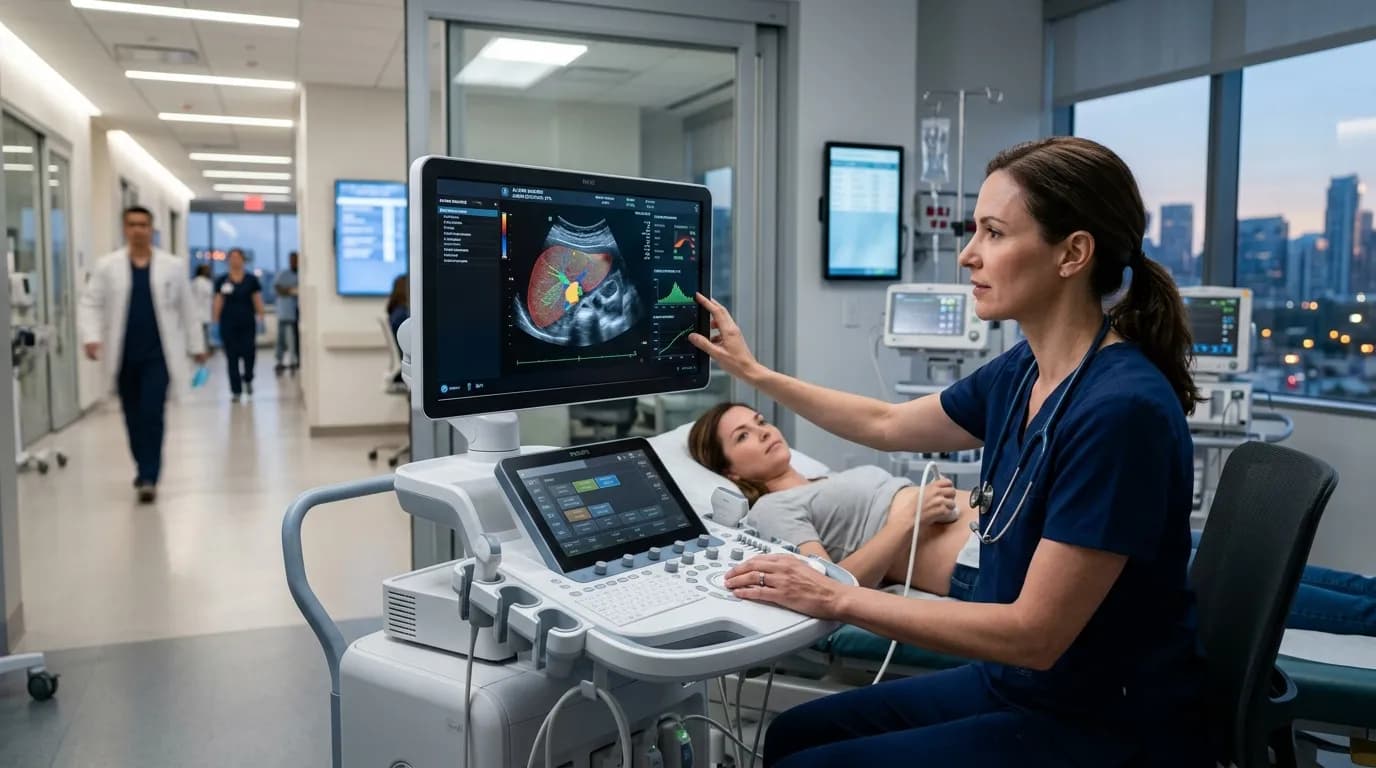
Recent data suggests that the integration of deep learning algorithms into imaging hardware is not merely an incremental improvement but a fundamental redesign of the diagnostic process. Traditionally, ultrasound has been regarded as one of the most "operator-dependent" imaging modalities, meaning the quality of the diagnosis was heavily reliant on the physical skill and experience of the sonographer. However, the introduction of AI-driven software is effectively "democratizing" high-quality imaging. By reducing diagnostic errors and significantly shortening examination times, these systems allow for a more standardized approach to patient care. This expansion is further catalyzed by a rising global demand for point-of-care testing (POCUS) and the increasing prevalence of chronic conditions—such as cardiovascular diseases and various forms of cancer—that require frequent, non-invasive monitoring.
Market Drivers and Technological Integration
In clinical settings, the adoption of software solutions that assist sonographers in real-time image interpretation is becoming the new standard. These sophisticated tools leverage convolutional neural networks (CNNs) to provide automated measurements and precise anatomical identification. For instance, in echocardiography, AI can now automatically calculate the left ventricular ejection fraction—a key indicator of heart health—with a level of consistency that rivals or exceeds human experts. By standardizing results across different skill levels, these tools mitigate the risk of subjective bias and inter-observer variability. This shift directly addresses the global shortage of specialized radiologists and sonographers, ensuring that the quality of a scan remains high regardless of whether it is performed in a high-traffic urban hospital or a remote community clinic.
The technological synergy between AI and hardware is perhaps most evident in the rise of portable and handheld ultrasound devices. These "pocket-sized" units have expanded the reach of diagnostic imaging far beyond the traditional confines of the radiology department. Emergency departments, intensive care units, and even rural field clinics are now utilizing these mobile units to perform immediate, life-saving assessments in fields such as cardiology, obstetrics, and musculoskeletal medicine. AI-driven guidance systems act as a "virtual coach," guiding non-specialist practitioners to position the probe correctly and capture diagnostic-quality images. Once captured, these images can be instantly analyzed by on-device AI or uploaded to the cloud for remote review by specialists. This unprecedented accessibility is a primary factor in the current market expansion, as it opens up new revenue streams in primary care and home-based health monitoring.
Regional Analysis and Economic Impact
From a geographic perspective, North America currently maintains market dominance, accounting for the largest share of the global AI ultrasound market. This leadership is sustained by a robust healthcare infrastructure, high levels of research and development spending, and a regulatory environment—led by the FDA—that has been proactive in clearing AI-enabled medical devices. Major industry players headquartered in the region are aggressively pursuing mergers and acquisitions to integrate AI startups into their existing portfolios, further consolidating the market. However, the narrative is shifting toward the East. The Asia-Pacific region is projected to exhibit the fastest growth rate over the coming decade. This surge is driven by massive government initiatives in China and India aimed at modernizing rural healthcare and the rapid adoption of digital health technologies among a massive, aging population base.
The economic implications of this growth are profound. Beyond the hardware and software sales, the AI ultrasound market is creating a secondary economy focused on data management and cybersecurity. As ultrasound devices become increasingly connected, the need for secure, HIPAA-compliant cloud storage and high-speed data transmission becomes paramount. This has led to a surge in partnerships between traditional MedTech firms and big-tech cloud providers. Furthermore, the shift toward value-based care in many Western economies is incentivizing the adoption of AI tools. Because AI can reduce the "time-to-diagnosis," it helps hospitals lower the length of patient stays and avoid the costs associated with misdiagnosis or unnecessary follow-up testing, providing a clear return on investment (ROI) for hospital administrators.
Challenges and the Path to 2030
Despite the optimistic growth projections, the AI ultrasound market faces several hurdles that must be navigated to reach full maturity. One of the primary challenges is the "black box" nature of some deep learning algorithms, which can make it difficult for clinicians to understand how a specific diagnostic suggestion was reached. Ensuring transparency and explainability in AI models is crucial for building trust among medical professionals. Additionally, there are ongoing concerns regarding data privacy and the potential for algorithmic bias, where software may perform differently across various patient demographics if the training data was not sufficiently diverse.
Regulatory bodies are also working to keep pace with the rapid rate of innovation. The transition from static AI models to "locked" algorithms that do not change after approval, toward "adaptive" algorithms that learn from new data in real-time, presents a complex challenge for safety certifications. However, as these regulatory frameworks evolve and become more streamlined, the barrier to entry for innovative startups will lower, likely leading to a second wave of market expansion characterized by even more specialized applications, such as AI-guided needle placement for anesthesia or automated detection of fetal abnormalities in early-stage pregnancy.
Looking toward the end of the decade, the AI ultrasound market is set to become an integral component of the broader "Internet of Medical Things" (IoMT). With the rollout of 5G technology enabling near-instantaneous transmission of high-resolution ultrasound video, the potential for real-time remote surgery and tele-ultrasound will become a reality. The transition from a reactive healthcare model to a proactive, AI-enhanced preventative model is well underway, with ultrasound technology serving as one of the most versatile and cost-effective tools in the digital medical arsenal. Investors and healthcare providers alike are closely watching this sector, as the fusion of acoustic physics and artificial intelligence promises to redefine the boundaries of diagnostic medicine.