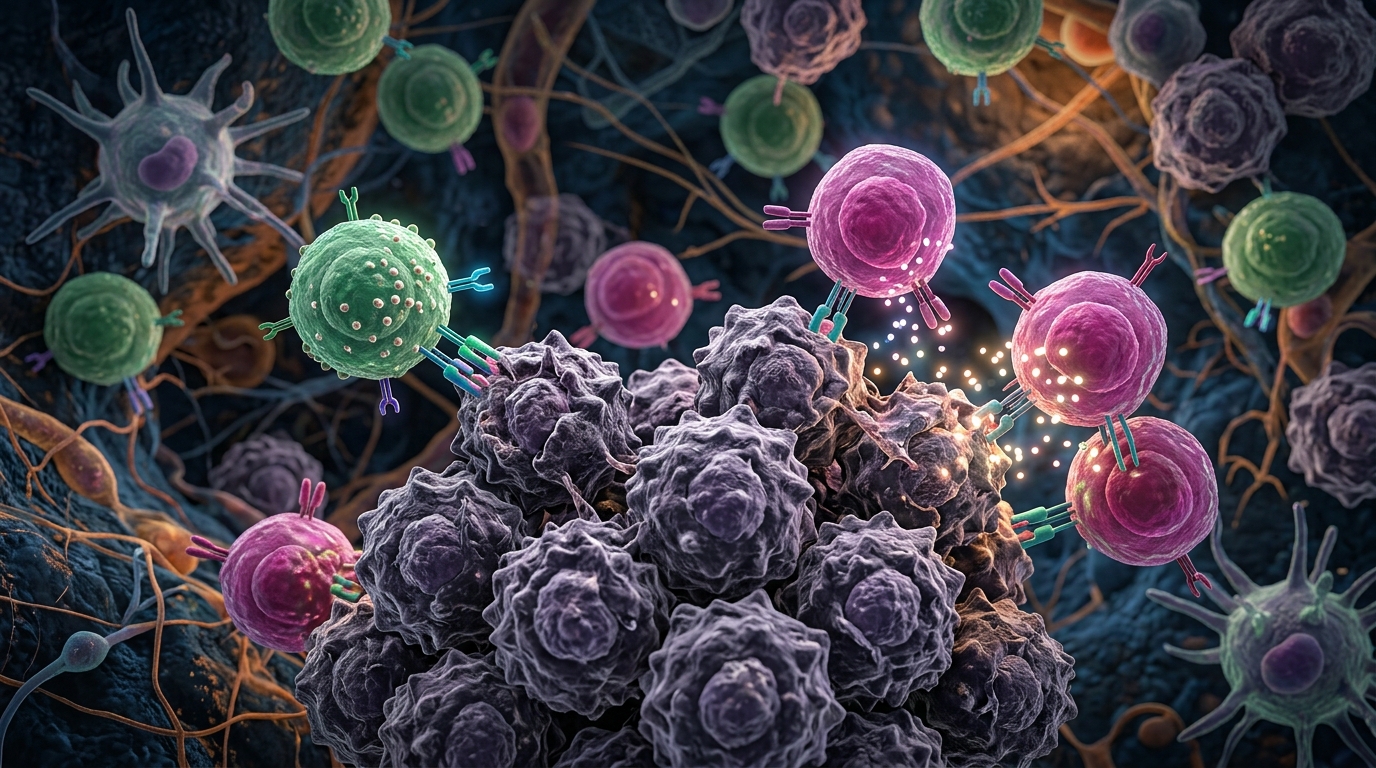
Phase II data shows durable survival in refractory cancer patients.
Triplet therapy combines checkpoint inhibitors with iNKT cells.
Immune reprogramming observed in patients with low PD-L1 levels.
Agenus Inc. announced positive Phase II clinical data for its combination therapy targeting PD-1 refractory gastroesophageal cancer. The trial evaluated the combination of botensilimab and balstilimab alongside agenT-797, an allogeneic iNKT cell therapy. Results indicate significant immune reprogramming and durable survival rates in patients who previously failed standard immunotherapy treatments. This milestone suggests a potential new pathway for treating advanced solid tumors that have developed resistance to existing checkpoint inhibitors.
Immune Reprogramming and Clinical Efficacy
The Phase II study focused on patients with metastatic gastroesophageal junction cancer who had progressed on prior anti-PD-1 therapies. Participants received a regimen designed to activate the immune system through multiple pathways. Researchers observed that the triplet therapy induced deep molecular responses even in subjects with low PD-L1 expression. This specific patient group typically faces a poor prognosis with limited intervention choices.
The data showed a median overall survival that exceeded historical benchmarks for this specific patient population. Clinical investigators noted that the combination of botensilimab and balstilimab successfully converted "cold" tumors into "hot" ones. This transformation allows the body's natural defenses to recognize and attack malignant cells more effectively. The study also highlighted a high objective response rate compared to monotherapy alternatives.
Safety profiles remained manageable throughout the study period despite the complexity of the triplet combination. Most adverse events were consistent with known immune-mediated reactions seen in similar oncology trials. Agenus Inc. plans to present these findings at upcoming medical conferences to further validate the therapeutic potential of their pipeline. The company maintains that the Fc-enhanced design of botensilimab is a primary driver of these results.
The trial also monitored specific biomarkers to track the progress of immune reprogramming. Patients showed an increase in activated T-cells and a decrease in suppressive myeloid cells within the tumor. This shift in the cellular environment correlates strongly with the observed durable survival. Such biological evidence provides a mechanical explanation for the clinical success of the regimen.
"These data demonstrate the potential of our botensilimab-based combinations to overcome resistance in some of the most difficult-to-treat cancers. We are encouraged by the durable responses seen in patients who had no other viable treatment options."
— Dr. Steven O'Day, Chief Medical Officer at Agenus
Agenus Reports Survival Data in Gastric Cancer Trial
Expanding the Therapeutic Scope
The integration of agenT-797 represents a technical advancement in the field of cellular therapy. These unmodified iNKT cells function as a bridge between the innate and adaptive immune systems. By combining these cells with checkpoint inhibitors, the treatment addresses the tumor microenvironment from several angles simultaneously. This multi-pronged approach is intended to prevent the tumor from developing new escape mechanisms.
Market analysts suggest that success in gastroesophageal cancer could lead to broader applications in other solid tumors. The biotech sector continues to monitor the development of Fc-enhanced antibodies like botensilimab. These agents are designed to improve T-cell priming and memory, which are vital for long-term remission. The current data supports the hypothesis that multi-agent immunotherapy can overcome traditional resistance.
Collaboration with academic centers has been a hallmark of this clinical program. The data collected from these partnerships helped refine the dosing schedules used in the Phase II trial. By optimizing the timing of botensilimab and balstilimab administration, the team reduced toxicity while maintaining efficacy. This operational precision is expected to benefit future large-scale international studies.
The company is currently preparing for late-stage regulatory discussions based on these Phase II outcomes. Future trials may look at earlier lines of therapy or combinations with standard chemotherapy. This strategic expansion aims to maximize the clinical utility of the botensilimab platform across various oncology indications. Management believes the data provides a strong foundation for a potential biologics license application.
The recent data release marks a pivotal moment for the Agenus oncology program. As the company moves toward Phase III readiness, the focus shifts to manufacturing scale-up and global trial recruitment. Investors and clinicians alike are watching for long-term follow-up data to confirm the durability of these initial survival signals. Final results will likely influence the standard of care for refractory gastric cancers in the coming years.
Stay Ahead of the News
Get the latest business news and company spotlights delivered to your inbox. No spam, unsubscribe any time.